Why Music Matters in Conflict Zones | Questions We’re Often Asked
We work in complex contexts where easy answers don’t exist.
Below are some of the questions we’re often asked — and how we think about them.
1. Does music really change anything?
Music doesn’t change the world. But music changes people.
What we see is people gaining confidence to speak, to organize others, and to participate instead of withdrawing.
Artists begin leading workshops instead of only performing.
Teachers begin teaching music independently.
Young people start showing up consistently instead of disengaging.
These shifts may sound small, but in places shaped by conflict, they are often the starting point for real, long-term change.
2. Why music instead of food, jobs, or healthcare?
There are two things people need to live: something to live on, and something to live for.
Food, jobs, and healthcare are essential for physical survival. But people also need purpose — something to care about, something to work toward, something that gives meaning to everyday life. Without that, people lose motivation, direction, and hope.
Music and the arts help restore that sense of purpose. They give people a reason to show up, to practice, to collaborate, and to imagine a future — which is especially critical in places where conflict has disrupted normal life for generations.
3. What does leadership mean at Music Beyond?
At Music Beyond, leadership doesn’t mean titles or authority.
It means taking responsibility for your community.
For artists, leadership means understanding the influence they already have — and choosing to use that power to empower others, rather than fueling anger, despair, or division. It’s about bringing people together in constructive ways and modeling a different path forward.
For teachers, leadership means using music education to support children’s mental focus, emotional expression, discipline, creativity, and confidence — skills that extend far beyond the classroom.
For young people, leadership often starts with finding purpose: showing up regularly, discovering their voice, and realizing they have something meaningful to contribute.
Leadership, for us, is responsibility — no matter what.
4. Why focus on artists in a crisis? Aren’t they a luxury?
In conflict-affected and authoritarian contexts, artists are often among the first to be targeted — and that’s not accidental.
This pattern has been seen in multiple authoritarian and conflict-affected contexts.
Artists, musicians, writers, and cultural figures are often silenced early because they shape culture, influence how people think, and help communities stay connected.
Artists are not a luxury. They are often unifiers and carriers of collective identity.
When fear and division dominate, artists can help hold communities together and open space for dialogue.
That’s why we support artists not as entertainers, but as community leaders.
5. Is this work scalable?
We focus on depth before width.
In fragile contexts, trust, consistency, and credibility matter more than numbers. We prioritize building leadership that is strong enough to continue without us directing every step.
For example, in Butembo, we work with a small group of artists who are beginning to train others through a train-the-trainer approach. The question isn’t how fast it grows, but whether leadership holds and multiplies organically.
Our long-term vision is to develop community-led models that are strong, responsible, and locally owned. When one model works well, it can be adapted thoughtfully elsewhere.
6. Can artists actually make a living?
Making a living as an artist is difficult anywhere in the world.
In countries affected by long-term conflict, like the Congo, it’s even harder.
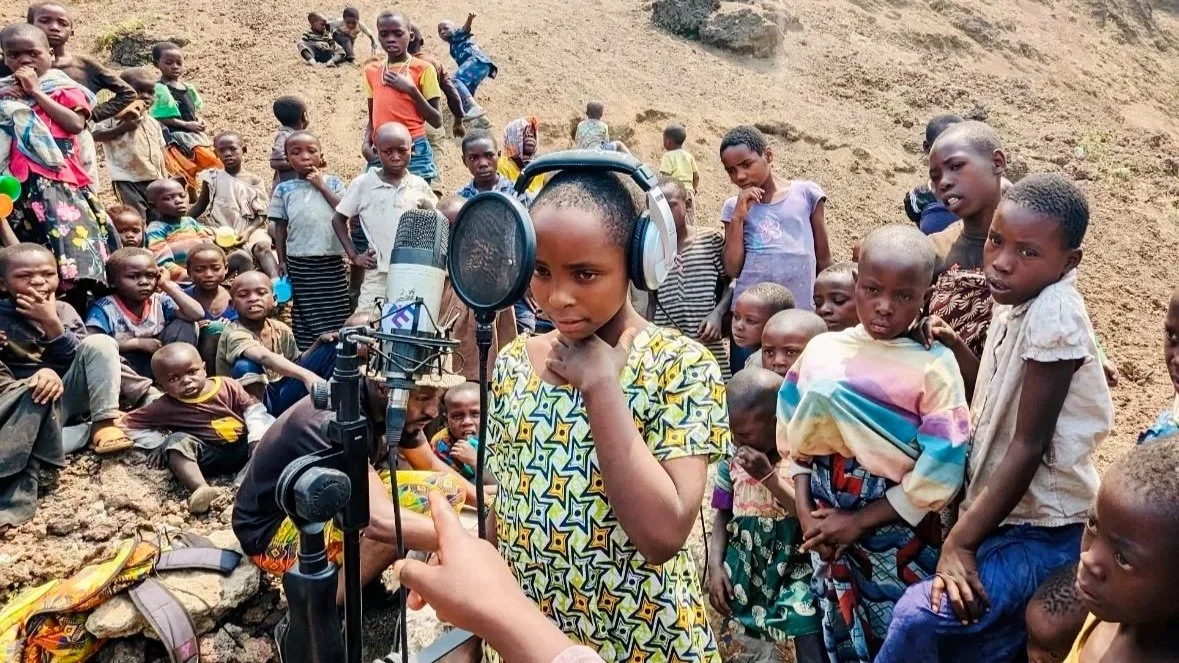
What we do is support artists in accessing opportunities — through album production, concerts, and our platform PlayMB — so they can earn income from their work where possible, while continuing their role as artists and community leaders.
7. How do you measure success?
Success looks like people stepping into responsibility who weren’t before.
Artists organizing others instead of standing alone.
Teachers confidently teaching music without us in the room.
Children showing up consistently — curious, focused, and engaged.
For us, success isn’t a single number.
It’s when people begin believing in themselves, in each other, and taking responsibility for their community — no matter the circumstances.
We document our work through program summaries, photos, videos, and reporting, and we make our organizational information publicly available through Candid as part of our commitment to transparency.
8. What’s your long-term goal or future vision?
Our long-term vision is to create a community-led cultural center in eastern Congo — a place where music, learning, and creativity can live under one roof.
The center is envisioned as a shared space for the wider community — not only for artists — with classrooms, rehearsal and gathering spaces, and basic infrastructure such as access to clean water through a well, benefiting the surrounding community as a whole.
This is not meant to be a flashy institution, but a practical, locally run space rooted in everyday community life.
Our goal is to build one model responsibly, learn from it, and ensure it is truly owned and maintained by the community.
If that model proves strong, it can be adapted to other places over time.
For us, the future isn’t about growing fast — it’s about building something that lasts.
Closing
At Music Beyond, our work is about more than music, and more than any single program.
It’s about restoring dignity, purpose, and connection in places where those things have been deeply disrupted — and doing so in a way that is led by the people who live there.
Music is the tool we use, but people are always at the center.